
For multifamily property managers and HOA board members across the greater Atlanta metropolitan area, maintaining a high tenant retention rate is directly linked to a single factor: the perception of safety. A beautifully renovated leasing office or an upgraded pool amenity cannot offset the reputational damage caused by a sudden string of vehicle break-ins or auto thefts in your community parking facilities.
According to major insurance risk reports, such as the Insurance Information Institute (III), vehicle-related property crimes represent a massive percentage of urban residential liabilities. When a parking deck or open lot is repeatedly targeted, the fallout hits property management immediately. Tenants break leases, negative online reviews tank your digital curb appeal, and leasing teams struggle to hit closing quotas.
To protect your residents, secure your asset, and stay firmly within your annual operating budget, you must pivot from passive monitoring to aggressive visual deterrence.
Why Passive Cameras Fail to Prevent Residential Crime
A common mistake among residential boards is relying solely on passive closed-circuit television (CCTV) cameras. While high-quality cameras are excellent for capturing historical data after a crime has taken place, they rarely act as an active deterrent for modern, masked property thieves.
Experienced criminals know that property staff rarely monitor camera feeds in real time. They can enter a parking structure, break into multiple vehicles, and exit the premises in under four minutes. To stop this cycle, your security framework must present an immediate, high-risk physical barrier that forces criminals to bypass your property entirely.
Strategic Actions to Secure Multifamily Parking Facilities
1. Maximize Visual Deterrence with Marked Vehicles and Active Lighting
Criminals seek out easy, low-risk environments. The most effective way to eliminate opportunistic parking deck break-ins is the constant presence of a clearly marked patrol vehicle equipped with active, high-visibility emergency security lights. When a security vehicle is highly visible moving through a structure, it completely removes the element of stealth that thieves rely on, forcing them to look elsewhere.
2. Implement Flexible Staffing Geared to Seasonal High-Risk Windows
Multifamily properties face highly cyclical security threats. Incident rates traditionally spike during the summer months when community amenities like pools, grills, and clubhouses are open late. This increase in foot traffic creates cover for unauthorized individuals to slip past access gates.
Property managers should utilize flexible security models that allow them to scale up guard hours and perimeter patrols during peak seasonal windows, ensuring complete coverage without inflating the baseline winter operating budget.
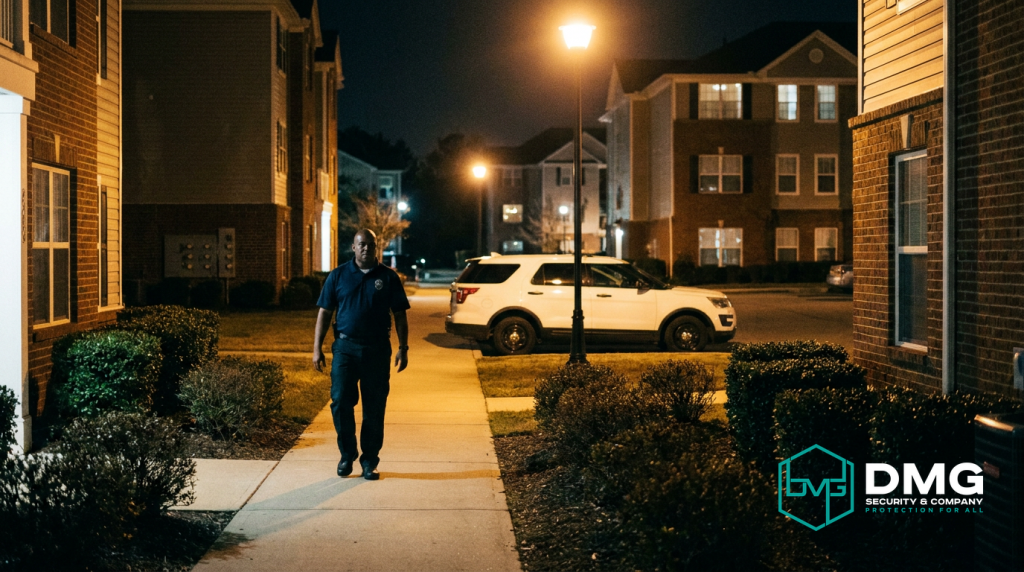
3. Foster Asset Safety Through Community Alignment
Security shouldn’t feel restrictive or purely disciplinary to your residents; it should feel collaborative. One of the most effective ways to lower incident rates is to actively integrate your security team into the neighborhood culture.
DMG Security partners directly with property management staff to sponsor and host tenant community events, such as seasonal watch parties, outdoor games, and community safety briefings. By breaking down barriers, residents become highly proactive—reporting un-vetted visitors, malfunctioning gates, or suspicious idling vehicles directly to our guards, essentially creating an extended network of eyes and ears for the property.
Frequently Asked Questions
How do frequent car break-ins impact an apartment complex’s financial valuation?
Frequent property crime directly degrades your Net Operating Income (NOI). If a community develops a reputation for vehicle theft, tenant turnover increases. The combined cost of turning units, offering rent concessions to attract new renters, and spending additional marketing dollars to overcome negative reviews far outweighs the cost of maintaining a consistent, professional on-site patrol framework.
What are the highest-risk zones inside a multi-level residential parking structure?
The highest-risk zones are typically the top exposed level, areas directly adjacent to unmonitored stairwells, and blind spots furthest from the main entrance gates. DMG Security maps out these exact coordinates during our initial site walkthrough, ensuring patrol routes intentionally prioritize these specific vulnerabilities during every single shift.
Secure Your Resident Community
Give your regional asset managers and your tenants a safety plan they can enthusiastically trust. Contact DMG Security today to schedule a comprehensive residential security analysis.